


Capital Research Center (CRC) was established in 1984 to champion the American traditions of charity, philanthropy and civil society, and to analyze threats to those traditions within the nonprofit sector.
Today thousands of political advocacy organizations promote government entitlement programs in areas once considered the domain of families, charities, neighborhood associations, and the private sector. Many individual donors and grantmaking foundations also support government solutions in place of free enterprise, voluntary action and community-based problem solving.
The CRC mission is to conduct research and to analyze the leaders, activities and funding sources of nonprofits that promote the growth of government. We also identify private and charitable alternatives to government mandates and entitlements. CRC's mission informs our activities and publications. To learn more about CRC visit http://www.capitalresearch.org/.
 By M
By M 444 pages | ISBN 978-1-892934-04-8
Paper Paper Retail Price:

Men of amazing entrepreneurial genius, like Andrew Carnegie, John D. Rockefeller, and Henry Ford, built commercial empires larger than the world had ever seen; they produced astronomical returns on investment and were rarely tricked out of their money in business deals. But when they turned to giving that money away, […]
[ Read more ]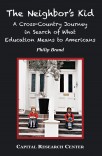 By P
By P 150 pages | ISBN 9781892934154 9781892934161
Paper Paper Retail Price:
E-Book Retail Price:
The Neighbor’s Kid tells the story of what twenty-four year-old Philip Brand discovered regarding American education when he drove his car cross-country during the 2008-09 school year visiting two schools in each of forty-nine states.
[ Read more ] By M
By M 63 pages | ISBN 978-1-892934-05-5
Paper Paper Retail Price:
Return to Charity?: Philanthropy and the Welfare State, by Martin Morse Wooster, clearly explains how the Victorian idea of charity for the poor was replaced by twentieth century social concepts of poverty and social welfare, which culminated in the “Great Society” welfare entitlement programs of the 196os.
[ Read more ]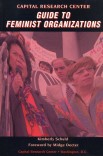 By K
By K 210 pages | ISBN 978-1-892934-08-6
Paper Paper Retail Price:
A survey of 36 nonprofit feminist organizations describing their mission, activities, leadership, finances (including sources and amounts of government and corporate funding), The Guide to Feminist Organizations is a must read for anyone interested in the history and impact of the feminist movement.
[ Read more ]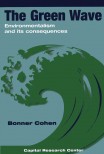 By B
By B 240 pages | ISBN 978-1-892934-11-6
Paper Paper Retail Price:
The Green Wave: Environmentalism and Its Consequences describes how activists created an ideology that now dominates public debate–and a movement of nonprofit groups that is well-organized and well funded. Whether the issue is energy exploration or agricultural production, public land use or private property rights, business ethics or government policies, advocates for “the environment” insist that their concerns must always come first. And they usually get their way.
[ Read more ]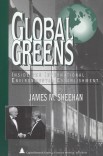 By J
By J 212 pages | ISBN 978-1-892934-00-0
Paper Paper Retail Price:
Published in 1998, Global Greens narrates the story of international environmental groups in world affairs. It examines how nongovernmental organizations (NGOs) work with the United Nations and other international organizations to promote environmentalist policies and treaties. To understand many of the current foreign policy controversies it is increasingly important to know how international environmental groups are involved.
[ Read more ] By M
By M 65 pages | ISBN 978-1-892934-14-7
Paper Paper Retail Price:
Author Martin Morse Wooster considers whether the legal life of foundations should be limited to prevent successor trustees from ignoring the donor’s intent. This volume surveys past congressional attempts to limit foundation perpetuity and offers case studies of donors who have put legal limits on their own foundations, setting a termination date and requiring the foundation to pay out all its assets.
[ Read more ] By J
By J 178 pages | ISBN 978-1-892934-13-0
Published in 2008, the Capital Research Center’s Guide to Nonprofit Advocacy is a directory of over one hundred of the most prominent nonprofit public interest and political advocacy groups in America, both liberal and conservative.
[ Read more ] By A and G
 144 pages | ISBN 978-0-692-41913-7
Paper Paper Retail Price:
Classical Education: The Movement Sweeping America examines the decline of American education and offers a solution. It is not more spending or a new and innovative program. Rather the solution, according to authors Gene Edward Veith, Jr. and Andrew Kern, is classical education.
[ Read more ]